


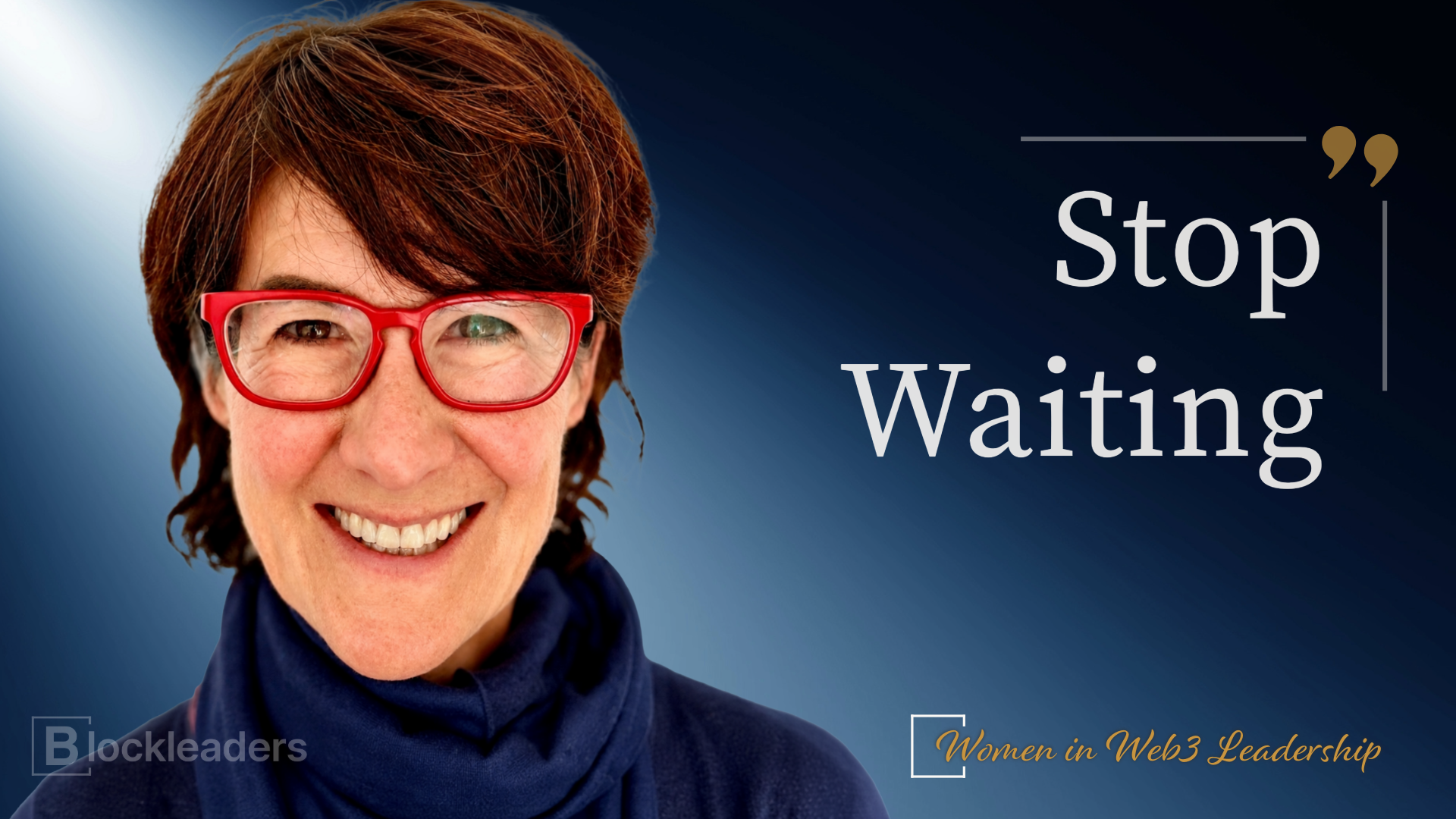

Jenna Peterson has spent more than two decades operating at the sharp end of finance and technology. Today, as COO of the Midnight Foundation, she sits at the intersection of blockchain, AI and decentralised finance, helping shape what many see as the next evolution of the internet. Yet for Peterson, leadership in Web3 is not about slogans, disruption narratives or fashionable jargon. It is about competence, access and creating environments where talent is genuinely recognised.
That perspective was forged long before crypto became mainstream conversation. Peterson’s career began inside the highly competitive world of high-frequency quantitative hedge funds, where performance was everything and access was tightly controlled. Traditional finance, she says, remains concentrated around geography, institutional relationships and established capital. Those systems function efficiently for those already inside them, but historically they have not broadened participation evenly across gender or socioeconomic lines.
Week 42 – Jenna Peterson, COO, Midnight Foundation
Blockchain, in her view, offers a structural shift. Open financial rails remove many of the gatekeepers that once controlled access to opportunity. “Anyone with connectivity can participate in global networks, hold assets and move value independently of nationality, gender or starting wealth,” she says.
While the technology continues to mature, Peterson believes decentralisation has already begun levelling the playing field in ways traditional finance never fully achieved.
That does not mean Web3 has solved its own leadership imbalance. Despite the rhetoric of meritocracy, the sector remains heavily male-dominated, particularly at senior levels. Peterson approaches the issue with clarity rather than frustration. The challenge, she says, is not simply exclusion but confidence.
She observes that women consistently underestimate their readiness while men often overestimate theirs. Brilliant female developers, auditors and analysts with years of deep technical expertise still question whether they are qualified to launch projects or lead teams. Meanwhile, individuals with only superficial market exposure frequently assume they are ready to run major decentralised applications.
Peterson believes that disparity has practical consequences. “Too many talented women hesitate before stepping forward, waiting until every qualification is met before pursuing opportunity.”
Her message is direct: stop waiting.
The advice reflects Peterson’s own approach to leadership. At Midnight Foundation, she has helped grow an international team by focusing less on hierarchy and more on culture. The key, she says, is finding organisations where contribution genuinely matters and where individuals have a real voice at the table.
That emphasis on people may appear unusual in an industry often obsessed with automation, protocols and trustless systems. Peterson dismisses the notion that any ecosystem is truly trustless. Whether in finance, blockchain or AI, systems ultimately depend on human judgment, institutional credibility and relationships.
Her leadership style remains deeply collaborative. Listening, coaching and practical judgment matter more than performative authority. Over time, she believes being a woman in fast-moving financial environments sharpened her instincts around trust and authenticity. In an increasingly AI-driven world, those human capabilities may become even more valuable.
Technical complexity also remains one of the biggest psychological barriers preventing women from entering Web3. Peterson argues that much of the industry’s intimidation factor comes not from impossible engineering challenges but from unfamiliar language. Once the vocabulary of protocols, tokens and decentralised systems becomes understandable, the sector becomes far more navigable.
AI, she notes, is also lowering technical barriers by making coding and development more accessible. Women entering the industry no longer need to fit a single archetype. There are opportunities across operations, governance, strategy, compliance, communications and product leadership alongside technical development.
Communities matter too. Peterson points to organisations such as SheFi, CryptoMamas and WiW3 as examples of supportive networks helping women establish themselves within the ecosystem. Unlike earlier periods in finance, she believes many Web3 communities are actively encouraging female participation and leadership.
The conversation becomes even more urgent as AI and blockchain increasingly converge. Peterson argues that women must be central to conversations around AI governance and ethical design. Systems reflect the values of the people building and funding them. Excluding women from those rooms risks embedding bias directly into the infrastructure shaping future economies and societies.
For Peterson, meaningful support extends beyond mentorship language into practical sponsorship. Early in her own career, the most valuable people were those willing to provide real opportunities, introductions and guidance. She believes the next generation of female leaders needs access not simply to advice, but to networks that actively open doors.
There is little sentimentality in Peterson’s assessment of the industry. Web3 remains volatile, technically demanding and culturally intense. Yet she sees genuine opportunity within it, particularly for women willing to claim space rather than wait for permission.
Three leadership lessons from Jenna Peterson:
- Find environments where performance is genuinely recognised and where there is a real seat at the table.
- Stop underselling your abilities. Apply before feeling completely ready.
- Learn the language of Web3, become visible within the ecosystem and stand your ground professionally.