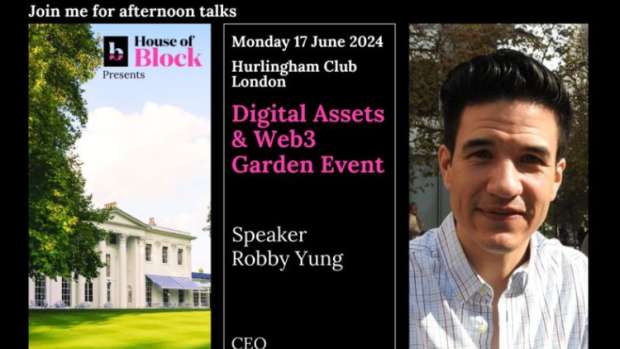




Tell me about your background and first experiences of coding?
I had been coding since middle school but only went to college in my late 20s. After school, rather than study straight away, I decided to live a little and headed over to Hawaii – eating coconuts and surfing. Good to get that out of my system, but I knew I was good at programming so I was drawn back to that world.
I had also come across Bitcoin in my 20s and it presented a challenge to me – mining was really technical and I wasn’t sure if I was doing it right, how to find a pool etc, so I just gave up on it at that time.
Later at a meetup in Portland, Oregon, someone presented on Ethereum and smart contracts and I was blown away.
I thought this is one of the coolest technical things that has happened in our lifetime and I wanted to work in this field.
I literally started cold calling people on Linkedin, asking for connections, asking to meet people for a coffee. I was then working in a boutique programming agency but work had dried up at the same time. Then all of a sudden a recruiter reached out to me and asked if I had heard of the newly launched NEAR protocol – this was late 2019.
How did the recruitment process go?
Well, it was nearly Christmas so rather than doing a live test I opted to bring a test home with me. I think they expected me to spend a reasonable amount of time on it, but I busted a gut and spent nearly 30 hours completing it.
I got the job in January 2020 and the next week we all flew to Argentina for the first NEARcon – there were maybe 20 people in total.
At first I felt I had imposter syndrome but I was motivated to do my very best, so I inhaled books like Mastering Ethereum cover-to-cover in order to catch up.
What happened next?
I was decent at engineering (and making the team laugh) I was promoted to manager, but this moved me away from what I was good at doing. I was able to find deeper meaning by helping build CronCat on NEAR, along with who would eventually be my cofounder.
I was reporting directly to Illia (Polosukhin) whom I had great admiration for but in reality I wanted to be a builder, not a manager.
For me, Web3 was the most fascinating thing to happen to me, to happen to my world, and I wanted to build.
It feels like a lot of society is built on middlemen, all taking their little bit, but we can create something that is trustless. This was an epiphany I had – we can have a neutral third party that no one can mess with, and do away with all those middlemen.
I wanted to be part of this, it felt like resigning to be a builder made the most sense. This was one of those tricky decisions one makes in life and often reflects upon.
So then what happened?
I was now running a small programming team using a DAO (with a council) which had used to authorize payments for contributions, but the human side kept on letting people down. Someone might be on vacation, another left their ledger at home – these were all human issues that amplified a gaping hole in web3 user experience we intended to address.
I saw this as an opportunity – let’s solve the human connection issue with DAO operations. We built a solution on the application layer – and I believe in time these solutions will be baked into protocols.
And this is a sticking point. There are a lot of builders out there – people expected to build using or raising their own funds – but if the application is successful, the rewards are shared with the blockchain. At this moment in time, builders take on all the risk and share in the reward. I feel this is unfair to builders – the protocols should support in tech and finance the builders, especially those building infrastructure or new superpowers, which are the nuts and bolts of the blockchain and what differentiates chains.
So what next with technology?
I feel as though we are still in the early days of Web3, like the early days of the internet. People are too focused on speculation rather than the new kinds of applications available via the beautiful math involved to make Web3 possible.
We’re still stuck in the lens of building apps that must have product market fit – but there isn’t a sufficiently large market for the traditional definition of product market fit, which is defined as attaining financial sustainability by extracting fees from end users. If the number of users are too low, and adequate funding isn’t available, I’m not sure how we expect to meaningfully incentivize builders.
We’re still discovering how best to approach funding, governance, reputation, and other non-trivial challenges. I hope to see quadratic funding gain even more steam than it currently has, and have hope this can be an engine to fund ecosystem projects.
So what is the main issue with Web3?
There are not enough people in many of these ecosystems to generate a sufficient return on build. It’s near impossible for builders alone to make a business work, with DeFi and DeFi-adjacent projects being exceptions. There is too much reliance on the ‘labour of love’ approach from builders.
The risks are too big for builders: If you fail, you go down alone; If you succeed, then any reward is shared with the blockchain, if even in the form of metrics like transactions per month.
What we’re starting to see are blockchain teams shoring up in-house dApp development teams, as they slowly face the reality that their chains are in danger if they cannot offer much reason for users to participate. I hope to see this trend underscore the larger problem, and in a way that paves a road for die-hard builders who have been here hustling for some time.
So where are you now?
I have run out of money. I pumped a lot into the project. I went to some fantastic conferences. I met a lot of really inspiring founders. But I am now looking for a salary. I’m not shutting down the company but I am putting it on ice. I am very proud of the project and its contributors, and the angel investors.
At the end of the day, there wasn’t a form of mutual support I’d expect from the protocols who’d directly benefit. And what often happens is that the grant programmes that do exist seem to mistake scammers with real builders who will not run off. Lots of grants just disappeared into thin air. It’s like foundations were so busy trying to attract developers they didn’t check out their backgrounds. And as a result the grants have also been slashed so even if there are builders out there, there is little or no funding available. The pendulum has swung rather far to the “product market fit” narrative, which might suffer from being square peg in a round hole. It’s great for a chapter in an MBA textbook, but might apply less to bleeding-edge tech than we’d thought.
Builders want to build, but cannot survive on modest grants. I hope the pendulum swings back, and opportunity cost appears once again for teams devoted to building projects for ecosystems with sizable treasuries.
I also have a fear that this reliance on ‘love labour’ will mean that nothing good gets built in this era. It’s too important to let this slip. Sometimes I wonder if our generation will miss the opportunity, and the next generation will build all useful stuff for society. Time will tell.