


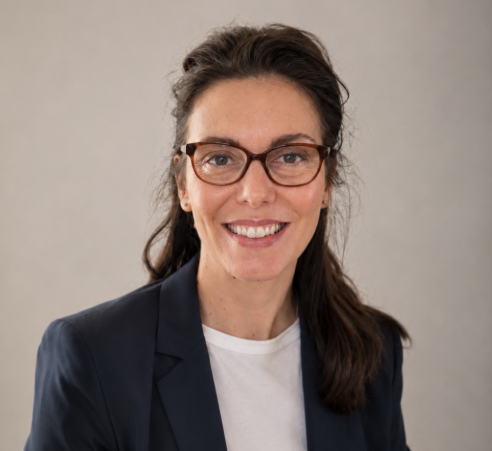

When Hanna Koch enrolled in the Algorand Masterclass, she was not looking to build a blockchain startup. She was looking for a practical way to use her creativity to solve real problems.
Based in Düsseldorf, Germany, Koch trained as a media artist at one of Europe’s best known art academies. For years she worked independently, creating video installations and exhibitions, but gradually found herself questioning whether art alone was enough. She wanted to apply her creativity in ways that could have a direct impact on people’s lives.
“I was looking for opportunities to use this creativity in a more applied way,” she says. “I came across blockchain through NFTs and found the technology fascinating.”
Helping Artists
Initially, her interest lay in helping artists. Smart contracts offered the possibility of automatically rewarding creators every time a work of art changed hands, something that traditional art markets rarely achieve.
“I found it fascinating, the idea of having a contract for a piece of art that would allow everyone who contributed to share in future royalties,” she says.
Yet as she explored the business opportunity, life intervened.
While taking part in an incubator programme for women in technology, Koch found herself balancing the demands of entrepreneurship with raising a young child while also caring for her mother. Conversations with other women in the programme revealed a common experience. Many were juggling careers, families and caring responsibilities, yet much of that work remained invisible and economically unrecognised.
Blockchain and Volunteering
At the same time, another blockchain project caught her attention. Someone was exploring the idea of using digital currency to reward voluntary work. For Koch, the connection was immediate.
“I immediately had the idea that we should create a digital currency to represent care work as a value contributed by billions of people worldwide, mainly women, who often experience significant economic disadvantages because of it.”
That moment became the foundation of Care-Coin.
Rather than treating unpaid care as something outside the economy, Koch wants to recognise it as work with measurable social value. Her vision is to build a platform where verified caregivers receive utility tokens that can be exchanged for products and services provided by participating organisations.
The concept is deliberately practical. A caregiver builds a verified profile, receives Care-Coins based on recognised care responsibilities and exchanges those tokens with participating partners. Companies, in turn, support a community they genuinely want to reach, while demonstrating a meaningful commitment to those whose work often goes unnoticed.
Finding Value
“The first question is always where does the money come from and how does the Care-Coin get value?” she says. “Our first business model is a two-sided platform connecting brands and services with caregivers.”
The idea also reflects changing attitudes towards personal data. Rather than collecting information for commercial exploitation, Koch believes blockchain allows individuals to decide exactly what information they wish to share.
“With Web3 technology you can give your consent to everything you want to share,” she says.
Turning the idea into reality required more than vision. Although Koch comes from an artistic background rather than software engineering, advances in AI have allowed her to build a working prototype herself.
“I’m a classical vibe coder,” she says. “I used AI and now we have a running application on the Algorand testnet.”
Her choice of Algorand was equally deliberate.
“I like their approach of blockchain for good,” she says. “They have programmes around sustainability and payment systems in underserved regions. I thought it would be a good place for a social project.”
Participation in the eight-week Algorand Masterclass proved transformative. More than one hundred people enrolled, but only six projects reached the final pitching stage. Koch’s proposal secured an Algorand grant, providing the funding needed to continue development without putting the project on hold.
Today her focus has shifted from coding to community building. The prototype is almost ready to launch and she is beginning the painstaking work of growing a network of caregivers before approaching commercial partners.
Building Community
It is a challenge familiar to every startup founder. Brands want an engaged community before they commit support, while communities grow faster once meaningful rewards become available. Koch understands that building both sides together is essential.
“I’m starting to grow the community now,” she says. “I’m collecting the interests of caregivers first so that I can go to potential partners and show them exactly what people need.”
For Koch, however, the project has always been about more than technology.
Blockchain may provide the infrastructure, AI may accelerate development and digital tokens may power the platform, but the real purpose is recognising the millions of people whose unpaid care keeps families and societies functioning every day.
It is an ambitious vision, born not in a boardroom or research laboratory, but in the everyday reality of balancing work, family and responsibility. In giving value to care, Koch hopes technology can finally acknowledge a contribution that has always mattered, even if it has rarely been counted.


