


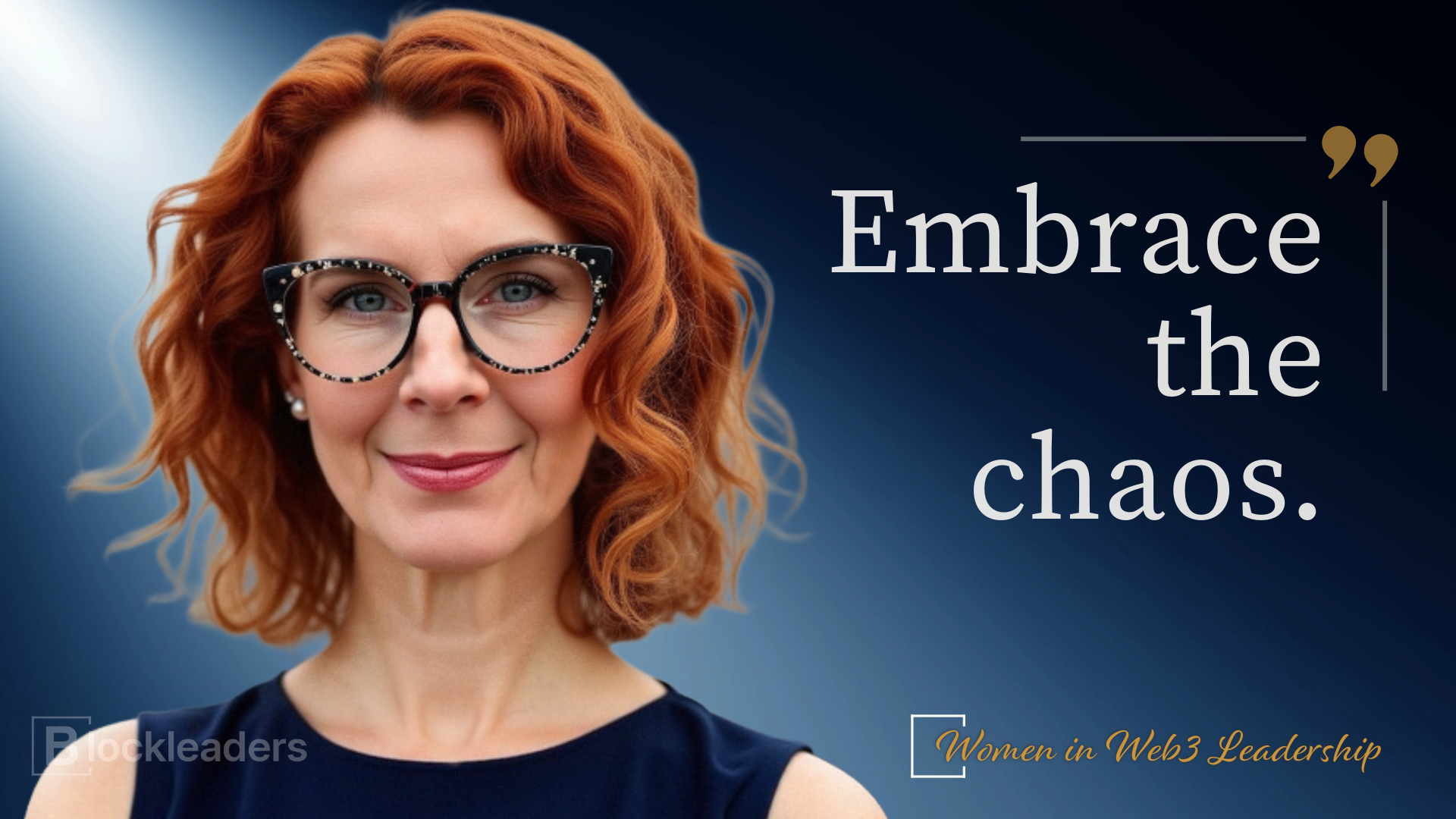

As Web3 continues to redefine the architecture of the internet, finance, and governance, it brings with it the rare opportunity to rebuild systems from the ground up. But if we are to build better, fairer, more inclusive systems, we must actively spotlight, and support, women in leadership roles.
Historically underrepresented in both tech and finance, women leaders bring diverse perspectives, collaborative approaches, and often values-driven leadership that prioritizes long-term sustainability over short-term gain. In Web3, where decentralized decision-making, community building, and innovation are core tenets, this diversity of style is very welcome if not essential.
Leadership isn’t monolithic. While traditional models have often emphasized hierarchy, competition, and control, many women leaders bring alternative approaches: participatory, empathetic, consensus-driven, or mentorship-focused. These styles align naturally with the ethos of decentralization and trustless systems, offering a counterbalance to purely technocratic or profit-led strategies.
By highlighting women in Web3 leadership, founders, developers, policymakers, and community builders, we not only correct representation gaps but also signal to the next generation that there is no single path to power. Visibility shapes possibility. And in a space as fast-moving and foundational as Web3, ensuring a plurality of voices isn’t just ethical, it’s strategic.
For the next 11 Mondays we are going to bring you some of the most inspiring women in Web3 and explore how and why they think as they do.
Week 1 – Lisa Loud, Executive Director, Secret Network Foundation
Leading with Trust in Web3: A Personal Perspective
Building a global team in Web3 has challenged every assumption I had about leadership. In a chaotic and volatile sector, leadership is not about asserting control, it’s about building trust. And while Web3 prides itself on being a trustless ecosystem, human leadership still depends on connection. As a woman, I’ve found that ability to connect can be a powerful strength, particularly when used with intention.
In my experience, women are often more community-oriented. We can lead by trust in a way that aligns naturally with this environment. When volatility is the only constant, people can’t rely on routine, stability, or even a clear career path. What they can rely on is the leader who listens and the team that feels connected. That trust becomes the only fixed point in a shifting landscape. It doesn’t just stabilize, it motivates.
Web3 often claims to be meritocratic, but in reality, decentralization only benefits women under specific conditions. I’ve seen more equality in anonymous DAOs, where contributors are known only by handles. In those rare cases, female voices can carry equal weight. But in most situations, traditional male-dominated power structures persist. Visibility often reinforces those patterns. It’s telling that many of the most effective female contributors in decentralized systems are invisible.
Of course, I’ve experienced challenges to my authority. Almost every day, in subtle ways. The issue is not whether it happens, it’s how invisible it is. Even when you call it out, there are always plausible explanations. You start to doubt yourself. But when I speak to other women and hear the same stories repeated, I realize it’s not imagined. It’s systemic.
How do I respond? Not by confrontation. I’ve learned that calling it out directly doesn’t change minds. It creates defensiveness. Instead, I focus on establishing credibility early and consistently. I come in strong from the start, clear, confident, and prepared, so that my expertise is visible before it can be questioned. I anticipate being undervalued and take steps to prevent it, not react to it. This includes asserting authority in early interactions, ensuring my contributions are clearly recognized, and helping other women do the same. It may not be fair, but it is effective.
When asked whether my identity as a woman shapes the way I lead, I offer a nuanced answer. I don’t wake up thinking about leading “as a woman,” but I know that being one influences how I’m perceived. So, I spend more time building loyalty and establishing expertise to ensure that my ideas aren’t dismissed. It’s a response to the reality I face, not an identity I choose to lead from.
To women entering technical fields in Web3, I say this: embrace the chaos. Volatility is not a bug, it’s a feature. In chaos, there is opportunity. If you want access to that opportunity, walk straight into the noise. Don’t wait for it to become structured or familiar.
Bridging grassroots communities and institutional stakeholders is part of daily life in Web3. It requires shifting modes constantly. We all play many roles: the way I speak to a corporate partner is different from how I engage with a developer community. It’s not about being inauthentic, but it’s about drawing on different parts of who you are. We do this naturally in life already. The key is knowing which self to bring forward in each context, without losing integrity.
The question of AI governance and gender has been on my mind. Watching Linda Yaccarino’s tenure at Twitter reinforced something I’ve seen repeatedly: appointing a woman to leadership doesn’t mean she’ll be heard. You can have a seat at the table and still be ignored if the louder voices dominate. If we want female perspectives to shape ethical AI development, they must come with real influence, not tokenism. Right now, that influence is too weak. That leaves me concerned, honestly, a little hopeless, about where AI ethics is heading.
Mentorship has been critical in my own path. Every time I’ve shifted perspective, whether in my role, career stage, or personal growth, I’ve relied on mentors to give me the outside perspective I couldn’t find alone. That’s the structure I would most like to see expanded for the next generation of women in tech.
To young women entering Web3, I offer three pieces of advice. First: speak. Take the mic. Visibility breeds opportunity. The moment you present your views to a group, you begin to be seen as a leader. Second: don’t wait until you’ve mastered a concept to share your thoughts. Too many women wait for 100% certainty. Men are often comfortable speaking at 60%. If you’re halfway there, it’s enough to join the conversation. Finally: build community. Leadership isn’t a solo act. It’s about who you bring with you, and how they grow alongside you.
In Web3, leadership is earned every day. There’s no script. But for those who embrace its uncertainty, there is room to shape the future. One voice, one decision, and one act of trust at a time.