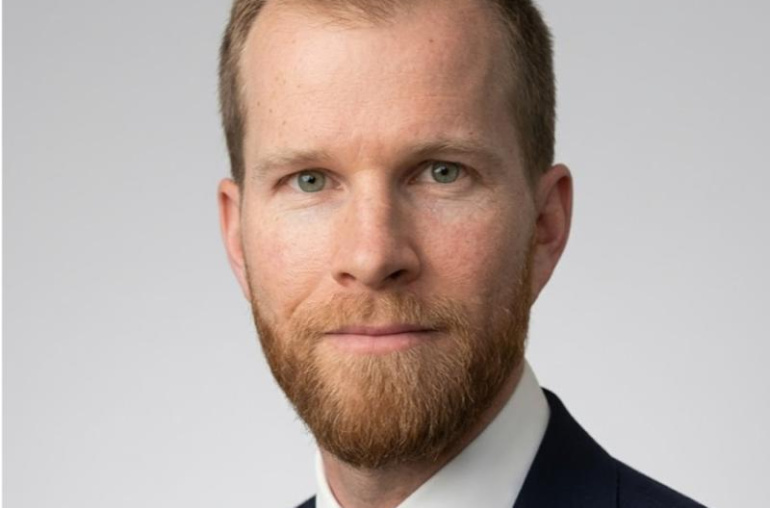


Kenny Wood has spent more than two decades building interactive systems, from chart-topping AAA games to mission-critical maritime simulators, university research and now AI-powered health technology. On the surface, the industries could hardly appear more different. Yet, throughout his career, one question has remained remarkably consistent: how do you motivate people to change their behaviour?
Today, as CEO of Sleepagotchi, Wood is applying those lessons to one of the most fundamental aspects of human health: sleep. Rather than waiting until people become ill, his ambition is to help them build healthier habits before medical intervention is ever needed.
“The bigger problem is that healthcare tends to wait until something’s wrong before it steps in,” he says. “We’d rather help people earlier, with the everyday habits that keep them well in the first place.”
Let’s Start with Sleep
For Wood, sleep was the obvious place to begin because it underpins almost every aspect of physical and mental wellbeing. Better sleep improves mood, concentration, metabolism, immune function and resilience, while also offering something few other health indicators provide: a measurable result every single day.
Healthcare, he believes, is gradually shifting away from simply treating illness towards helping people prevent it.
“It’s not either/or,” he says. “Medicine will always matter for serious illness. But the future of healthcare is about preventing that outcome by helping people improve the everyday things that shape their health, sleep, movement, food and stress. If you can genuinely get someone to care about their own health and shift those daily habits, you prevent a lot of problems before they ever start.”
That focus on behaviour rather than information also explains why Wood believes many health and wellness applications fall short.
“People already know they should sleep more, eat better and move more,” he says. “Knowing was never the problem.”
Too many applications, he argues, simply present data and expect users to change. Sleepagotchi takes a different approach by borrowing ideas from the games industry, rewarding small improvements, encouraging consistency and helping healthy routines become habits that eventually no longer depend on the app itself.
“The goal isn’t to remind you harder,” he says. “It’s to make better sleep something you actually want to show up for until it quietly becomes a habit you own.”
Those ideas are rooted in lessons learned long before Sleepagotchi existed.
Experience helped shape his Thinking
Working in AAA games taught him how reward systems encourage people to keep returning. Maritime simulation demanded something entirely different: understanding complex real-world systems with enough accuracy to reproduce them faithfully. Academic research and teaching added another dimension, forcing him to break complicated ideas into forms that others could easily understand.
Each experience, he says, contributed to the way he approaches technology today.
“In games you invent the rules,” he explains. “Simulation is the opposite. You don’t get to imagine the system; you have to understand a real one deeply enough to reproduce it. What you gain is a genuine feel for how things actually work, not how you wish they did.”
Artificial intelligence has accelerated that journey still further. Wood believes AI dramatically reduces the distance between an idea and a working product, allowing much smaller teams to build sophisticated applications that once required entire studios. At the same time, he recognises that lowering the barriers to entry also increases competition, making originality and execution more important than ever.
Privacy has also shaped the company’s approach. Although Sleepagotchi incorporates Web3 technologies, Wood is careful to distinguish between blockchain and personal health information.
“Health data is about as personal as it gets,” he says. “It’s yours, and you should decide who gets to use it.” The blockchain, he explains, supports the platform’s commercial ecosystem rather than storing personal health records, which remain under the user’s control.
AI Health tools
Looking ahead, Wood expects AI health companions to become commonplace, offering personalised recommendations while leaving medical diagnosis firmly in the hands of healthcare professionals. Trust, however, will depend on transparency, user control and the ability for individuals to delete their data whenever they choose. Technology, he argues, should work for the user, never the advertiser.
For all the technological change that has marked his career, Wood sees a single thread running through every project he has undertaken.
“I think every one of these industries is about building an interactive system that takes a human from one state to another,” he says. “Teaching someone to dock a ship, training a player to master a mechanic, helping someone fix their sleep. If you drill down, it’s the same core concept, which is learning something new.”
He smiles at the thought before arriving at what may be the simplest summary of his career.
“I’ve never really thought of myself as a games person or a health person. I’m a problem solver that works in tech, who designs for human behaviour. I just happened to do it across different domains.”