



In 2023, the World Health Organization (WHO) declared loneliness to be a pressing global health threat, with the US surgeon general saying that its mortality effects are equivalent to smoking 15 cigarettes a day. They even launched a commission with the aim of recognising the issue and ensuring that it is resourced correctly. So how and why are our communication channels not providing us with the right engagements and giving us those feelings of inclusion that we long to feel?
From the famous historic cave art of Altamira in Spain to the instant ways we communicate online today, the human drive to connect is as strong as ever. As we stand on the brink of a new era it is vital to hold on tight to the value of our social interactions, maintaining that deeper level of satisfaction that we get when we meet somebody for a coffee in real life.
The Metaverse is going to forever alter the way we communicate, making virtual spaces integral to our future social engagements. Although some may say that this is another way to force people to rely on their devices it could be argued that it is far superior to the 2D interactions we have become all too familiar with today.
A Brief History of Communication
Communication began with simple gestures and sounds, evolving into spoken language, the foundation of human interaction. The invention of writing on clay tablets in 3400 BC was the beginning of the preservation of knowledge across generations. From stone to scrolls and to printed books, each advancement made information more accessible.
The 19th and 20th centuries saw a rapid succession of technological breakthroughs. The telegraph, telephone, radio, and television each transformed communication, shrinking the world and bringing people closer together. However, it was the advent of the internet that truly revolutionized the way we interact, making global communications a vital part of everyday life.
Today the world is packed full of devices that have become ubiquitous, providing instant access to real-time communication with friends, family and colleagues. Smartphones have become indispensable tools.
Hyper Reliance on Devices
Our dependence on digital devices has reshaped communication, creating both opportunities and challenges. On one hand, we can connect with anyone, anywhere, at any time. On the other, the reliance on screens has led to concerns about digital fatigue, the erosion of face-to-face interactions, and the quality of online discourse.
Text-based communication dominated the early internet era, from emails and instant messaging to social media posts and comments. While efficient, it lacked the nuances of voice and face-to-face interactions, often leading to misunderstandings and a lack of emotional depth.
While social media platforms promised to connect us, they can paradoxically lead to feelings of social isolation. A study published in the American Journal of Preventive Medicine in 2017 revealed that those who spent more than two hours a day on social media had twice the odds of feeling lonely. The study also found that the frequency of visits played a significant role. Now consider the amount of times to click or stroll today.
From Text to Audio
The shift from text to audio was a significant step in the evolution of digital communication. The rise of podcasts, voice messages, and audio-based social platforms like Clubhouse marked a return to more natural, conversational forms of interaction. Voice communication restored some of the nuances lost in text, such as tone and emotion, enhancing the quality of digital conversations.
Today, we are increasingly at the “voice level” of communication, where voice assistants, smart speakers, and voice-activated devices are becoming commonplace. These technologies facilitate hands-free interactions, making communication more convenient and integrated into daily life. However, this is just the beginning of a new wave of communication.
From Audio to Avatar
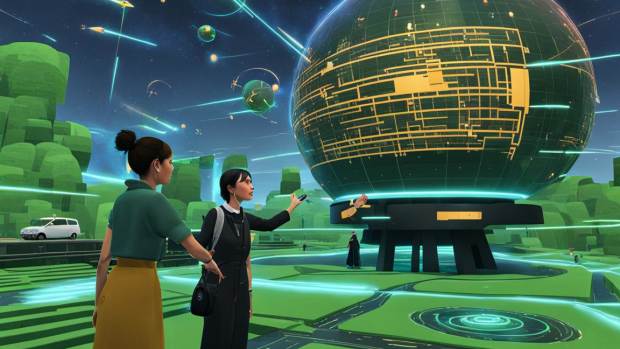
The Metaverse represents the next frontier in communication. As a channel for engaging with others it provides a collective virtual shared space. It will eventually encompass all immersive technologies.
In the Metaverse, communication is already transcending traditional boundaries.Users can create avatars that show off different sides of their personalities and those avatars can participate in digital communities.
The rise of platforms like Decentraland, Upland, The Sandbox, Neoki and Spatial are ushering in a new era of immersive, three-dimensional online environments. These platforms are playgrounds for the public who wish to experiment in the next generation of social spaces. They represent a vital shift in communication, collaboration, and connection.
While devices have become crucial components of our everyday lives it is worth exploring how to harness the benefits of technology without compromising our mental health and losing those important connections that gives us a sense of community.