


I am not sure if you have noticed, but crypto sponsorships have infiltrated major sports over the past few years.
The most iconic arenas in basketball are renamed to feature crypto product placement, football teams are minting fan tokens to entice their followers to spend more money, and UFC gets $17.5 annually when their athletes wear apparel with Crypto.com logo on their way to the octagon.
Believe it or not, this is child’s play compared to crypto adoption in Formula 1! The highest class of international open wheel racing is taking the #1 spot when it comes to ‘dabbling in crypto’, as every single team in F1 has had at least one crypto related sponsor by 2023.
The championship itself rakes in $100 million over 5 years from Crypto.com, who get to plaster their name all over 23 international tracks, and not that long ago the same company has struck a low nine-figure nine-year deal to sponsor the Miami Grand Prix race, one of the most expensive racing events in the entire world.
So, what’s the deal? Why does F1 take the proverbial ‘cake’ in crypto sponsorships, and why do companies throw so much money for advertising in the elite racing series?

Legitimacy Through Association Is Real
Everything is as simple as 2+2. Running an F1 team is a very costly venture, and crypto companies need more adoption. It is a mutually beneficial agreement, you see.
We could end the article here, but what’s the fun in that, right? Let’s talk about this topic, and go back in time for a few minutes. So sponsors have always been a big part of Formula 1 history.
The first recognized F1 sponsor appeared in 1968, when Team Lotus signed a £85,000-a-year deal with Imperial Tobacco. The cars took to the track for the Monaco Grand Prix resembling Gold Leaf cigarette packets, and the rest is history, there was no turning back from that point. F1 had a 40 year relationship with tobacco giants.
Companies like Marlboro and Camel have become iconic, in large part thanks to the amazing cars that featured their logo. Those amazing red and white of liveries are etched into the memory of F1 fans, and God knows how many boys have started smoking after seeing McLaren of late 80s and early 90s or Michael Schumacher’s Ferrari of the 2000s.
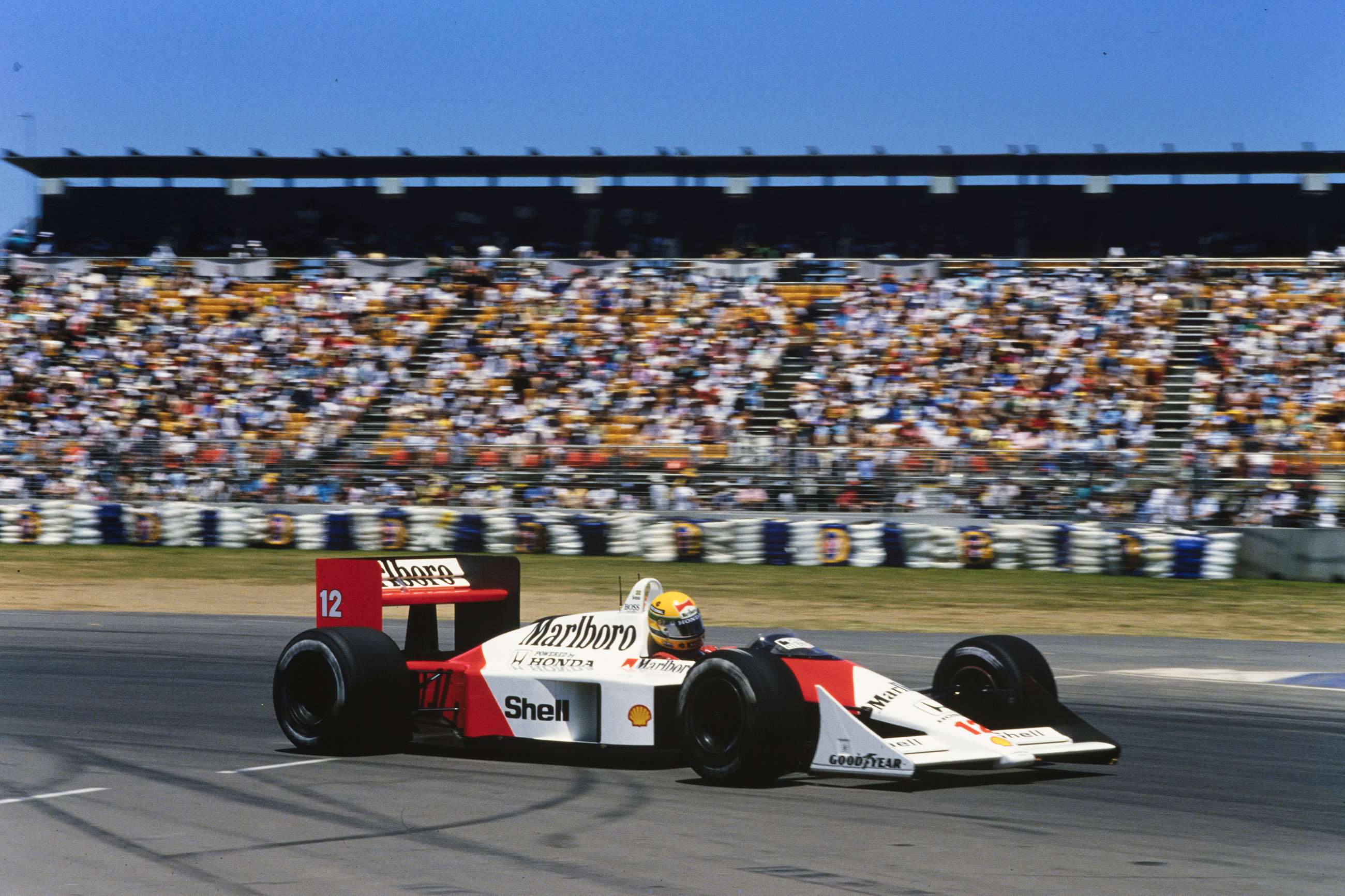

Now more than 300 brands are Formula 1 sponsors, and ironically, tobacco companies are kind of banned. Smoking cigarettes doesn’t reflect the cultural zeitgeist of 2023, it’s not hip.
While the betting sponsors are all over the place, some countries now begin to take a stance against their advertising in sports. Here is when crypto swoops in, to take a very prominent spot.
F1 Teams Are Hungry And Ultra Competitive
For those who don’t know, Formula 1 features 10 different teams and they need ALL the money, so they are not exactly picky when it comes to sponsors. Everything is fair game! Literally.
As I’ve mentioned above, every single garage has opted to represent at least one crypto related company on the precious real estate of their cars. Red Bull, the dominant team who took the Constructors Championship last season, has linked with Bybit, Tezos and Sui blockchain to get somewhere in the ballpark of 60 million per year from crypto sponsors.
Legendary McLaren team, who’s rocking close to 50 sponsors on their car nowadays, takes a second place with an estimate of ‘just’ 20 mil going from Tezos and OKX exchange. Middle of the pack outfit Alfa Romeo has the most crypto sponsors from all the teams on the grid with at least four, with memecoin Floki being the biggest one.
Teams are jumping in on the action!

Ferrari underwhelms even here, with Velas putting them only midtable for a bit. They have since terminated the agreement after refusing to mint NFTs. But hey, it could be worse, as Mercedes had been in cahoots with FTX until their untimely collapse. Toto Wolff and his team can’t catch a break, making wrong choices that looked adequate or even smart before the snafu.
Funny enough, backmarker Haas is sponsored by an NFT investment platform OpenSea. Their eccentric boss Guenther Steiner once openly said ‘Last year, for two points, I would have shagged the whole paddock’, so it seems like the hustle never stops in those garages.
Finally, the old school Williams team stayed away from all things crypto the longest, but eventually was pressured to ‘fit in’ and take the money from Metaverse Terra Virtua.
The peer pressure is real.

Just Like Crypto, F1 Is Rolling All Over The World
Here’s another obvious reason – F1 is international, taking place in 20 countries spread around five continents.
NBA and UFC, who have negotiated big lump crypto contracts too, can’t say the same about themselves, even though they can occasionally cross the border to host a few events outside of their usual habitat. By getting in the mix of F1 racing, crypto companies not only get a lot of eyeballs on their brand, but also a lot of eyeballs coming from different cultures.
With 1.54 billion cumulative TV viewers in 2022 and a total attendance of 5.7 million people the same year, I’d say crypto sponsors get a lot of bang for their buck.
Plus, those cars are proper big and can feature so many brands. 5.63 m in length, 2 m wide, 95 cm tall. With all due respect to Lionel Messi, his frame can’t compete with that.
And you see, different countries have different rules. For example, alcohol ads are banned in the Middle East and France. With the first three races of the season hosted in Sakhir, Bahrain and Saudi Arabia, you have to fill that space to pay the bills and build that shiny new rear wing that will give you a 0.2 second advantage over the field for a few races.
Season kicking off in the Middle East is actually great for crypto sponsors, since those are some of the most watched races of the season. The reason behind that is simple – fans hope to see someone new fight for the title, and when they realize that Max Verstappen is still in the league of his own, they might switch off the TV and go wash the dishes, then return next year.
But there was a time when the worlds of F1 and crypto peaked at the same time – the year of 2021.

The Timing Really Couldn’t Be Better
2021 is not the year many of us will re
member fondly, but some good things happened in that grim timeline.
That year gifted us one of the most exciting Formula 1 seasons in modern history, and marked the peak of the crypto market, when the all-time high price of Bitcoin was around $65,000. Indeed, it was the best of times, it was the worst of times.
Pandemic has dealt a real low blow to all sports in general, with most sports losing billions of revenue through disruption to broadcast schedules and games played without fans in stadiums. Sponsors just had to step up and give teams the lifeline they needed, as F1 teams get 35-40% of income from sponsors even in normal times. Crypto companies emerged in the right place, at the right time, and so the fast forward adoption of crypto sponsors was one the cards.
One could say it was a perfect storm of happy coincidences, as F1 itself exploded in popularity thanks to the docudrama series called ‘Drive To Survive’. People stayed at home, subscribed to Netflix, got hooked on F1, and now they are visiting the races live, they see a lot of crypto company logos around the track.
- Oi young one, what is this crypto thing above our heads?
- I dunno, grandad, but crypto likes to say ‘%^CK the banks’ or something like that.
- Ah, that’s something I can get behind. Hook me up!
You get the point, they are building awareness through fan curiosity. People try Red Bull or because of their fan affection to the winning team, and when they’ll try to get into crypto, they’ll be more keen to choose a recognizable brand to do their token business.
It is all done so you would ‘remember the name’.

Formula 1 Fans Seem Like They’d LOVE Crypto
Like come on, it is that obvious. Both are a rollercoaster of emotions, for one.
Secondly, Formula 1 is the most technologically advanced sport in the world, and some of their fans tend to gravitate towards things oozing with data. It’s not cricket, is it? From the distance, if you checked the telemetry of someone’s flying lap, crypto bros would be sure that you’re looking at the price graph of some altcoin.
Crypto and F1 appeals to that coveted 18-34 male demographic, both are activities that are not exactly great for the climate at the moment, and both rely on split second decisions that give you an adrenaline rush that may or may not lead to a heart attack.
Finally, as Sebastian Vettel once said, everyone is a Ferrari fan. Even if they say they’re not, they are Ferrari fans. And Ferrari fans are accustomed to pain and suffering, so they are a natural fit for the wild crypto space. I’d say Ferrari fans have those ‘diamond hands’, continuing to support the team that has failed them so much in the last 15 years, so they would HODL for sure.
In all seriousness, a survey of 1,500 U.S. adults showed 57% of households with an avid sports fan have owned digital assets, compared with 24% without one. Finally, the market and F1 are both kinda ‘meh’ at the moment, but their supporters know that the best things are still behind the corner. Not too long now…
To make this unbearable wait a bit more tolerable, I’d urge you to go check out my personal blog. See you there!