


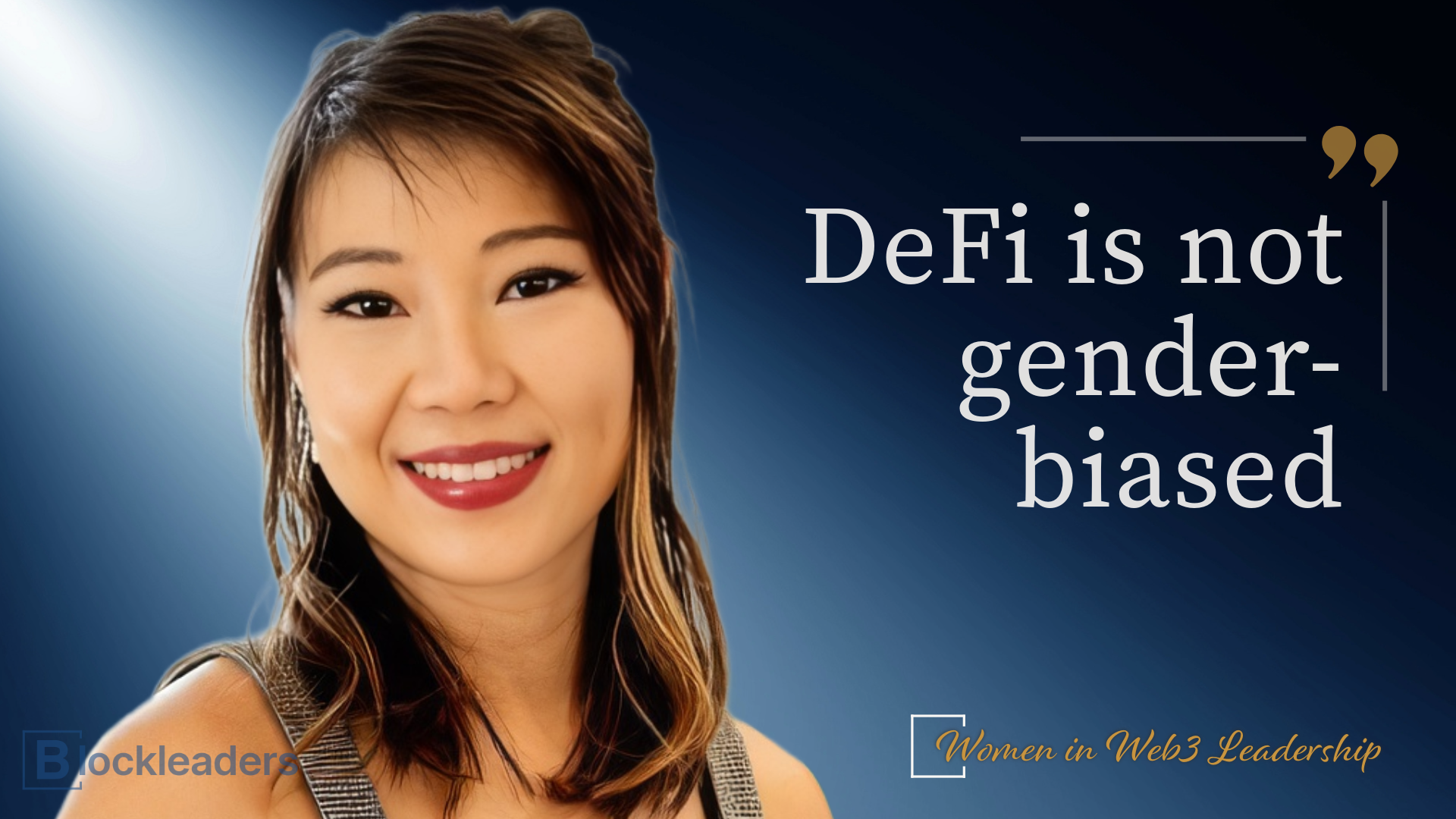

Week 40: Candice Teo, Principal & Founder, Espoir PR & Communications
Candice Teo, Principal and Founder of Espoir PR & Communications, has built a global communications practice across two decades in public relations, including nine years in Web3. Her experience spans both traditional corporate environments and the evolving decentralised ecosystem, giving her a vantage point on leadership, gender dynamics and the practical realities of operating in a still-maturing sector.
Teo’s approach to leadership is direct and grounded in personal agency. “Being proactive is key. Ask for things that you want, chase the opportunities that you deserve and take the time to learn new things to sharpen your insights.”
She places particular emphasis on intellectual curiosity beyond immediate professional requirements, arguing that exposure to adjacent topics can unlock networks and opportunities that would otherwise remain out of reach.
Her view of Web3 is cautiously optimistic. While the sector promotes itself as meritocratic, she acknowledges the persistence of structural imbalances. Nonetheless, she believes decentralisation is widening access. The removal of geographic constraints in hiring, the growth of global teams, and the expansion of decentralised finance have collectively lowered barriers.
“DeFi is not gender-biased and yield-generation opportunities for more financial freedom can ease a lot of limitations for a woman in a leadership role.”
At the same time, Teo is alert to the risks. The increasing institutionalisation of Web3 may replicate traditional hierarchies. Her assessment is pragmatic rather than ideological, noting that established financial sectors have already begun addressing gender disparities, which may in turn accelerate progress within Web3.

Teo does not frame her leadership identity primarily through gender. She resists reductive interpretations that attribute professional behaviour to gendered traits, instead pointing to experience and environment as the dominant influences. However, she recognises that gender can shape interpersonal dynamics. She observes that initial interactions may be more open, but that credibility must still be established through substance. Her communication style reflects a balance between candour and encouragement, particularly in managing teams where feedback can be misinterpreted in digital-first environments.
Her career path illustrates this adaptability. Before entering Web3, she held senior roles in regulated industries, including aviation, where she led corporate communications for a public-listed company at 27. That early exposure to investor and government relations, in a male-dominated sector, informed her current ability to navigate both institutional and grassroots environments. She draws heavily on this experience, while maintaining an active engagement with emerging trends to remain relevant in a rapidly shifting landscape.
Technological complexity, often cited as a barrier to entry, is not, in her view, a deterrent. Teo is explicit about the need for non-technical professionals to engage deeply with the underlying technology.
“When I run announcements or craft narratives, I ensure that I understand the tech so that I speak and pitch from a position of knowledge and understanding.” Her method is straightforward: direct engagement with developers, continuous learning, and a focus on the practical implications of technology, captured in her recurring question, “and so what?”
She also highlights the importance of alignment between personal values and professional engagements. In an environment characterised by rapid change and frequent complexity, this alignment provides both motivation and resilience.
Teo’s perspective on community reflects her broader leadership philosophy. She credits early career experiences in supportive, meritocratic teams with shaping her approach. These environments combined high performance expectations with flexibility and mentorship, reinforcing the value of shared responsibility and open access to leadership. She has sought to replicate these conditions in her own work, both within her firm and through external initiatives.
One such initiative is her role as a core contributor to Crypto Comms Collective, a network for Web3 communications professionals. The group operates as a closed, trust-based community, sharing opportunities, challenges and insights. Its structure reflects Teo’s belief that collaboration, rather than competition, strengthens professional ecosystems. She also stresses the importance of physical interaction, noting that conferences remain critical for relationship-building and access to opportunity. Related: Georgia Hanias of Ecology Media on networks as net worth.
On the question of gender and governance, particularly in the intersection of AI and blockchain, Teo advocates for broader inclusion without resorting to simplistic binaries. She argues that diversity of experience, rather than gender alone, strengthens ethical frameworks. However, she identifies specific areas where women’s perspectives have been historically underrepresented, particularly in roles related to communications, data handling and privacy. These functions, she argues, are central to ethical decision-making and should be more closely integrated into technical development processes.
Her leadership model is shaped by experience, reinforced by continuous learning, and executed with a focus on clarity, credibility and consistency.
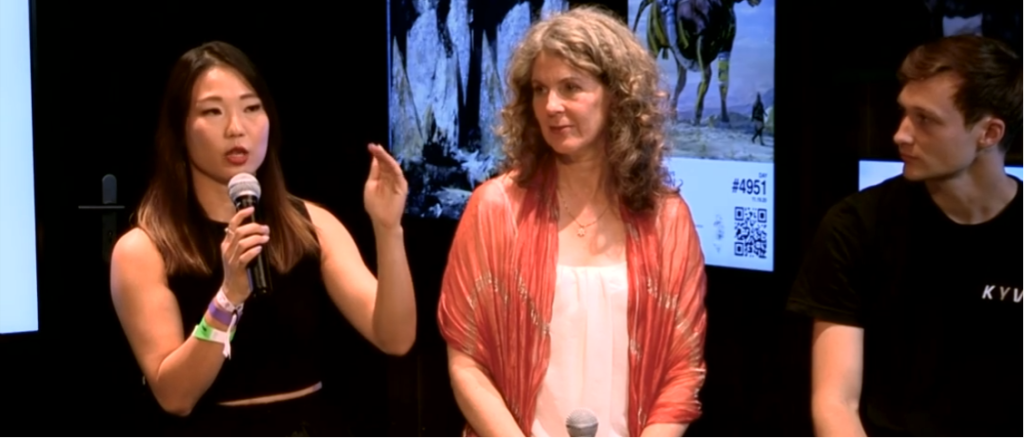
Three pieces of advice
First, recognise that imposter syndrome is common but not necessarily grounded in reality. Teo advises tracking achievements and revisiting them regularly as a way to maintain perspective. “Imposter syndrome is real but it does not mean that it is true.”
Second, focus on work that aligns with personal interests and values. Even within roles that may not fully reflect these priorities, she suggests creating opportunities through internal initiatives or external projects to build meaningful engagement.
Third, establish clear boundaries. Understanding non-negotiables and learning to decline requests when necessary is, in her view, essential to sustaining both performance and well-being. “Saying ‘no’ is one of the hardest things but with time, you will become more comfortable with it.”